Πέμπτη 9 Δεκεμβρίου 2010


Τετάρτη 8 Δεκεμβρίου 2010
Ντένις Ντάτον: Μια Δαρβινική θεωρία της ομορφιάς

Ντένις Ντάτον: Μια Δαρβινική θεωρία της ομορφιάς.
About this talk
To TED συνεργάζεται με τον σχεδιαστή κινουμένων σχεδίων Άντριου Παρκ για να απεικονίσουν την προκλητική θεωρία του Ντένις Ντάτον για την ομορφιά - ότι η τέχνη, η μουσική και άλλα όμορφα πράγματα, εκτός του ότι δεν εξαρτώνται απλώς "από τη ματιά του θεατή", είναι ένα κεντρικό τμήμα της ανθρώπινης φύσης με βαθιά εξελικτική καταγωγή.
About Denis Dutton
Denis Dutton is a philosophy professor and the editor of Arts & Letters Daily. In his book The Art Instinct, he suggests that humans are hard-wired to seek beauty.Why you should listen to him:
Dutton teaches philosophy at the University of Canterbury in New Zealand, and is the editor of Arts & Letters Daily, a three-column compendium of culture news from all over the web. (His own homepage is another storehouse of tidbits from his wide-ranging explorations in philosophy and culture.) He’s on the advisory board of Cybereditions, a publisher specializing in ebooks and print-on-demand editions of nonfiction works. And he’s an editor of Climate Debate Daily, a lively blog that takes a skeptical view of some climate-change arguments.
Ο Νταν Ντένετ και τα επικίνδυνα μιμίδια, Dan Dennett on dangerous memes

Dan Dennett on dangerous memes
Ο Νταν Ντένετ και τα επικίνδυνα μιμίδια.
About this talk
Starting with the simple tale of an ant, philosopher Dan Dennett unleashes a devastating salvo of ideas, making a powerful case for the existence of memes -- concepts that are literally alive.
Ξεκινώντας από την απλή ιστορία ενός μυρμηγκιού, ο Νταν Ντένετ ξεκινά ένα χορό ιδεών, στήνοντας την πιο πετυχημένη υπεράσπιση για την ύπαρξη των μιμιδιων: ότι οι ιδέες είναι κατ' ουσίαν ζωντανές.
Ξεκινώντας από την απλή ιστορία ενός μυρμηγκιού, ο Νταν Ντένετ ξεκινά ένα χορό ιδεών, στήνοντας την πιο πετυχημένη υπεράσπιση για την ύπαρξη των μιμιδιων: ότι οι ιδέες είναι κατ' ουσίαν ζωντανές.
About Dan Dennett
Philosopher and scientist Dan Dennett argues that human consciousness and free will are theWhy you should listen to him:
This mind-shifting perspective on the mind itself has distinguished Dennett's career as a philosopher and cognitive scientist. And while the philosophy community has never quite known what to make of Dennett (he defies easy categorization, and refuses to affiliate himself with accepted schools of thought), his computational approach to understanding the brain has made him, as Edge's John Brockman writes, “the philosopher of choice of the AI community.”
“It's tempting to say that Dennett has never met a robot he didn't like, and that what he likes most about them is that they are philosophical experiments,” Harry Blume wrote in the Atlantic Monthly in 1998. “To the question of whether machines can attain high-order intelligence, Dennett makes this provocative answer: ‘The best reason for believing that robots might some day become conscious is that we human beings are conscious, and we are a sort of robot ourselves.'”
In recent years, Dennett has become outspoken in his atheism, and his 2006 book Breaking the Spell calls for religion to be studied through the scientific lens of evolutionary biology. Dennett regards religion as a natural -- rather than supernatural -- phenomenon, and urges schools to break the taboo against empirical examination of religion. He argues that religion's influence over human behavior is precisely what makes gaining a rational understanding of it so necessary: “If we don't understand religion, we're going to miss our chance to improve the world in the 21st century.”
A prolific writer, Dennett's landmark books include The Mind's I, co-edited with Douglas Hofstedter, Consciousness Explained, and Darwin's Dangerous Idea.
"Dan Dennett is our best current philosopher. He is the next Bertrand Russell. Unlike traditional philosophers, Dan is a student of neuroscience, linguistics, artificial intelligence, computer science, and psychology. He's redefining and reforming the role of the philosopher."Marvin Minsky

Δευτέρα 6 Δεκεμβρίου 2010
Τα νέα πειράματα του Σουγκάτα Μίτρα για την αυτοδιδασκαλία
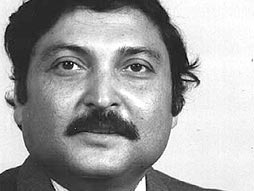
Τα νέα πειράματα του Σουγκάτα Μίτρα για την αυτοδιδασκαλία.
About this talk
Ο παιδαγωγός ερευνητής Σουγκάτα Μίτρα, προσεγγίζει ένα από τα μεγαλύτερα προβλήματα της εκπαίδευσης - οι καλύτεροι δάσκαλοι και τα καλύτερα σχολεία δεν βρίσκονται εκεί όπου χρειάζονται περισσότερο. Σε μια σειρά πειραμάτων πεδίου, από το Νέο Δελχί, ως τη Νότιο Αφρική και την Ιταλία, παρείχε στα παιδιά πρόσβαση στο διαδίκτυο με δική τους επίβλεψη και συνέλεξε αποτελέσματα που μπορούν να φέρουν επανάσταση στον τρόπο που σκεπτόμαστε για τη διδασκαλία.
About Sugata Mitra
Sugata Mitra's "Hole in the Wall" experiments have shown that, in the absence of supervision or formal teaching, children can teach themselves and each other, if they're motivated by curiosity and each other, if they're motivated by curiosity and peer interest.
Why you should listen to him:
In 1999, Sugata Mitra and his colleagues dug a hole in a wall bordering an urban slum in New Delhi, installed an Internet-connected PC, and left it there (with a hidden camera filming the area). What they saw was kids from the slum playing around with the computer and in the process learning how to use it and how to go online, and then teaching each other.
In the following years they replicated the experiment in other parts of India, urban and rural, with similar results, challenging some of the key assumptions of formal education. The "Hole in the Wall" project demonstrates that, even in the absence of any direct input from a teacher, an environment that stimulates curiosity can cause learning through self-instruction and peer-shared knowledge. Mitra, who's now a professor of educational technology at Newcastle University (UK), calls it "minimally invasive education."
In the following years they replicated the experiment in other parts of India, urban and rural, with similar results, challenging some of the key assumptions of formal education. The "Hole in the Wall" project demonstrates that, even in the absence of any direct input from a teacher, an environment that stimulates curiosity can cause learning through self-instruction and peer-shared knowledge. Mitra, who's now a professor of educational technology at Newcastle University (UK), calls it "minimally invasive education."
"Education-as-usual assumes that kids are empty vessels who need to be sat down in a room and filled with curricular content. Dr. Mitra's experiments prove that wrong."Linux Journal

Κυριακή 5 Δεκεμβρίου 2010
Πώς προχωράει ο κόσμος από τα κομμάτια του χοίρο

Πώς προχωράει ο κόσμος από τα κομμάτια του χοίρου.
About this talk
Η Κριστιέν Μειντέρτσμα, συγγραφέας του ΄Χοίρος 05049' βλέπει την καταπληκτική κατάληξη ενός χοίρου, κομμάτια του οποίου παίρνουν το δρόμο τους για τουλάχιστον 185 προϊόντα μη-χοιρινά, από σφαίρες μέχρι τεχνητές καρδιές.
About Christien Meindertsma
Christien Meindertsma uses art (and craft) to expose the hidden processes and connections of our modern life.
Why you should listen to her:
Dutch artist Christien Meindertsma explores raw materials in thoughtful ways, making simple books and products that lay bare complex and once-hidden processes. For her first book,Checked Baggage, she purchased a container filled with a week's worth of objects confiscated at security checkpoints at Amsterdam's Schiphol Airport after 9/11. She meticulously categorized all 3,267 items and photographed them on a white seamless background. Her second book, PIG 05049, documents the astounding array of products that different parts of a pig named 05049 could support -- revealing the lines that link raw materials with producers, products and consumers that have become so invisible in an increasingly globalized world. PIG 05049 was acquired by New York's Museum of Modern Art this winter.
With her product designs, Meindertsma plays with ancient, natural materials and processes. In a project for the Nature Conservancy last year, she made the sensuous Idaho rug, knitted from inch-thick felted wool yarn from the fleece of sheep at Lava Lake Ranch in Idaho. Each panel of the massive rug was knitted (on giant wooden needles) from the fleece of one sheep, using a different stitch per animal to display the personalities that make up a flock.
"What Meindertsma and [collaborator Julie] Joliat so elegantly illustrate is the level of disconnect, physically and psychologically, consumers have from the production of objects we use on a daily basis."Paul Galloway, cataloguer, Department of Architecture and Design, MoMA

Νικόλας Χριστάκης: Πως τα κοινωνικά δίκτυα προβλέπουν επιδημίες

Νικόλας Χριστάκης: Πως τα κοινωνικά δίκτυα προβλέπουν επιδημίες.
About this talk
Μετά τη χαρτογράφηση περίπλοκων κοινωνικών δικτύων των ανθρώπων, ο Νικόλας Χριστάκης και ο συνάδελφός του Τζέιμς Φάουλερ άρχισαν να ερευνούν πως αυτή η πληροφορία θα μπορούσε να βελτιώσει τις ζωές μας. Τώρα, αποκαλύπτει τα μόλις δημοσιεμένα ευρήματά του: Αυτά τα δίκτυα μπορούν να χρησιμοποιηθούν στην ανίχνευση επιδημικών φαινομένων νωρίτερα από ποτέ, από την εξάπλωση καινοτόμων ιδεών μέχρι τις επικίνδυνες συμπεριφορές και τους ιούς (όπως ο Η1Ν1).
About Nicholas Christakis
Nicholas Christakis explores how the large-scale, face-to-face social networks in which we are embedded affect our lives, and what we can do to take advantage of this fact
Why you should listen to him:
People aren't merely social animals in the usual sense, for we don't just live in groups. We live in networks -- and we have done so ever since we emerged from the African savannah. Via intricately branching paths tracing out cascading family connections, friendship ties, and work relationships, we are interconnected to hundreds or even thousands of specific people, most of whom we do not know. We affect them and they affect us.
Nicholas Christakis' work examines the biological, psychological, sociological, and mathematical rules that govern how we form these social networks, and the rules that govern how they shape our lives. His work shows how phenomena as diverse as obesity, smoking, emotions, ideas, germs, and altruism can spread through our social ties, and how genes can partially underlie our creation of social ties to begin with. His work also sheds light on how we might take advantage of an understanding of social networks to make the world a better place.
At Harvard, Christakis is a Professor of Medicine, Health Care Policy, and Sociology, and he directs a diverse research group investigating social networks. His popular undergraduate course (Life and Death in the US) is podcast [available on itunes]. His book, Connected, co-authored with James H. Fowler, appeared in 2009, and has been translated into nearly 20 languages. In 2009, he was named by Time magazine to its annual list of the 100 most influential people in the world, and also byForeign Policy magazine to its list of 100 top global thinkers.
"'Connected' is [in the category of] works of brilliant originality that stimulate and enlighten and can sometimes even change the way we understand the world"NY Times Book Review

Conrad Wolfram: Teaching kids real math with computers

Conrad Wolfram: Teaching kids real math with computers
About this talk
From rockets to stock markets, many of humanity's most thrilling creations are powered by math. So why do kids lose interest in it? Conrad Wolfram says the part of math we teach -- calculation by hand -- isn't just tedious, it's mostly irrelevant to real mathematics and the real world. He presents his radical idea: teaching kids math through computer programming.
About Conrad Wolfram
Conrad Wolfram runs the worldwide arm of Wolfram Research, the mathematical lab behind the cutting-edge knowledge engine Wolfram Alpha
Why you should listen to him:
Conrad Wolfram is the strategic director of Wolfram Research, where his job, in a nutshell, isunderstanding and finding new uses for the Mathematica technology. Wolfram is especially passionate about finding uses for Mathematica outside of pure computation, using it as a development platform for products that help communicate big ideas. The Demonstrations tool, for instance, makes a compelling case for never writing out another equation -- instead displaying data in interactive, graphical form.
Wolfram's work points up the changing nature of math in the past 30 years, as we've moved from adding machines to calculators to sophisticated math software, allowing us to achieveever more complex computational feats. But, Wolfram says, many schools are still focused on hand-calculating; using automation, such as a piece of software, to do math is sometimes seen as cheating. This keeps schools from spending the time they need on the new tools of science and mathematics. As they gain significance for everyday living, he suggests, we need to learn to take advantage of these tools and learn to use them young. Learn more atcomputerbasedmath.org.
"What he's saying is that enough time is wasted in math classes on JUST calculation, that often the underlying concept is lost anyway."TremorX, YouTube

Εγγραφή σε:
Αναρτήσεις (Atom)